
From strength exercises to performance diagnostics: exercise is a key lever for metabolism, mood, sleep and healthy ageing.
Exercise does not have to be perfect to work. What matters is that you do it regularly, that it suits your current fitness level, and that it can realistically be fitted into your life.

Suitable rather than extreme
If you have not exercised for a long time, you do not need perfection. If you train ambitiously, you benefit from precise guidance. In both cases, it helps to get the training load right.
More in the section Health is balance: Nutrition · Stress management · Leisure · Simplicity · Balance

Medicine with experience, media expertise and a clear stance
Dr. Thomas Kurscheid is a specialist in general practice (Facharzt für Allgemeinmedizin), a physician in sports medicine, nutritional medicine and preventive medicine, and has been known as a TV health expert for many years. In his practice he combines conventional medicine with prevention, metabolic expertise and a clear view of what people can actually put into practice in everyday life.

Strength exercises with the resistance band
The benefits of strength training
- maintains and strengthens the muscles – muscles are the body’s largest energy consumers
- can contribute to lower blood pressure
- strengthens the postural muscles, which can help prevent neck and back problems
- can improve mood
Training recommendation for the resistance band
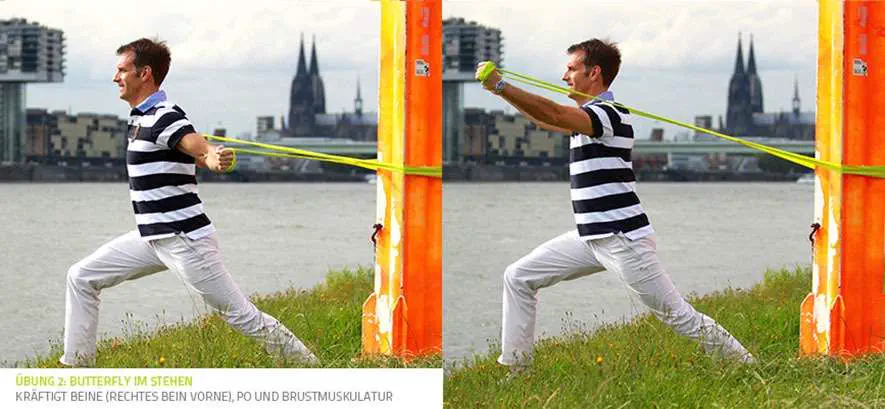
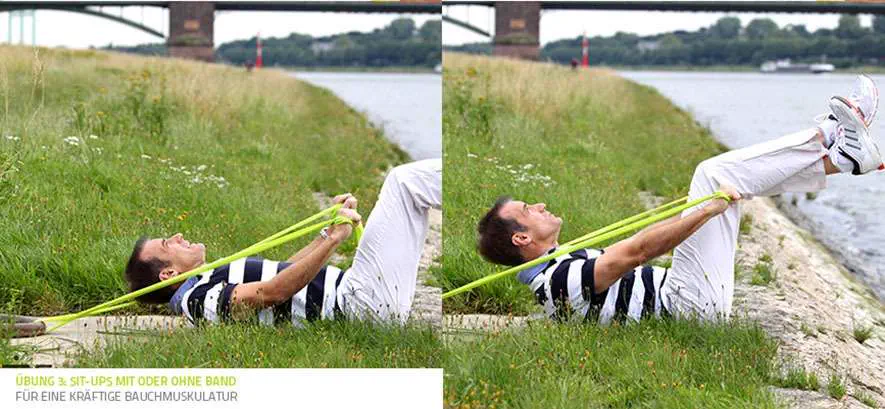
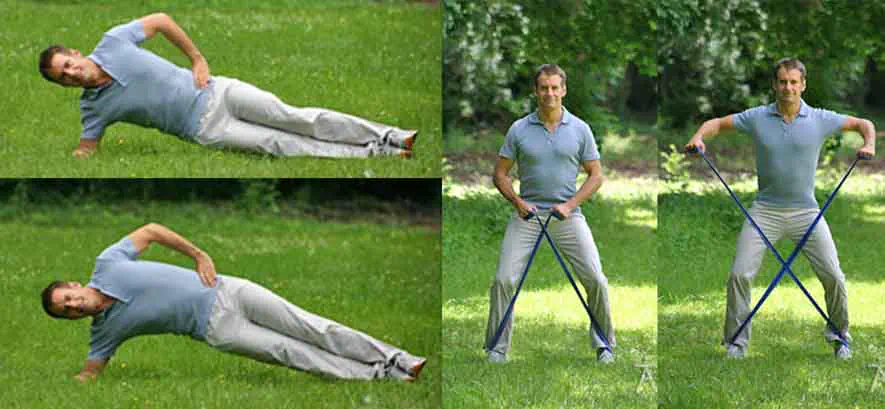
For your muscle to grow, it has to be taken to its limit – towards the end of each exercise it should burn slightly. Choose the stretch of the band so that you can only perform an exercise 12 times. Afterwards, the muscle should rest for 1 minute; in that time you train the opposing muscle (e.g. after rowing, the butterfly exercise).
In this way, each muscle performs 3 × 12 repetitions in total – most effective when done in slow motion. Women usually use one green band, men two.
Note: Before starting strength or endurance sport, you should have a sports-medicine check-up – especially from the age of 35, e.g. with our Sports Medicine Performance Check.
Exercises with the resistance band